The Day Grief Moved Out
The Day Grief Moved Out
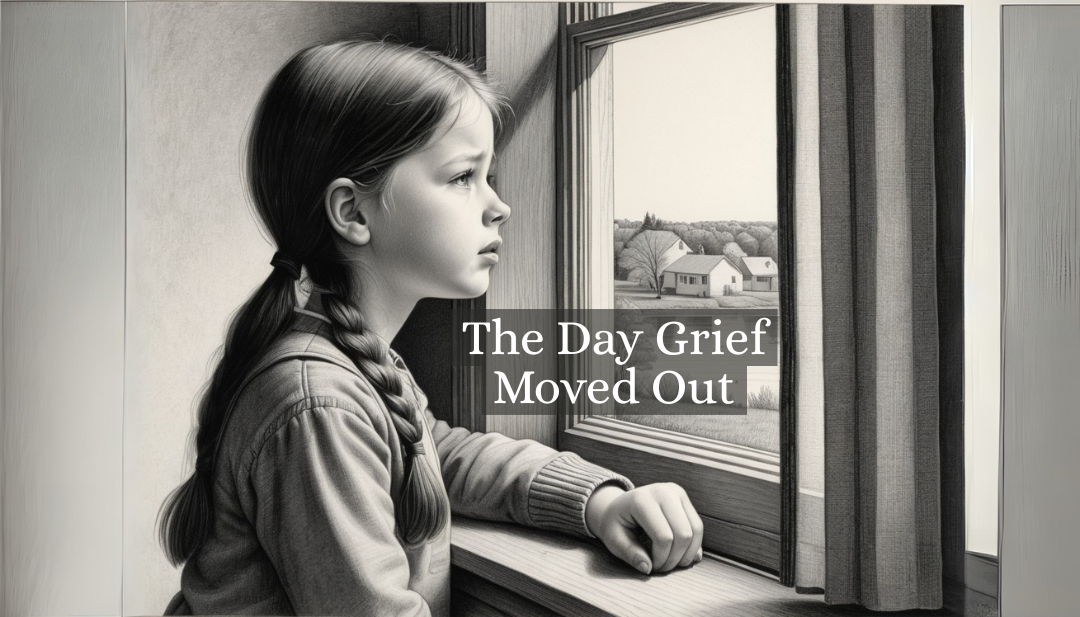
I lost my father in 2021, though the real departure happened decades earlier, when I was eight years old and still learning to tie my shoes without thinking too hard about it. He left without a scene, without noise, and without explanation. There was no phone call, no clumsy adult attempt at comfort or closure. He was just gone, half the closet empty. The hangers were still rocking back and forth, he left so quickly.
In the vacuum he left behind, I cried and tried to rationalize what happened. I didn’t realize it at the time, but those actions became the scaffolding for every silent rejection I absorbed later. Not good enough. Not worth staying for. Not lovable enough to anchor a father’s presence. I didn’t even realize that I was thinking those things; they were just woven into my soul. And eventually, they were buried.
I grew up and life went on, but I didn’t know I was still carrying that pain, it wasn’t really in my memory. Oddly enough, I carried it in the joints of my body and in the breath that I never let it deepen. It was festering there, showing up in my need to keep over-achieving, pleasing, and always pushing forward. Looking back I realize I did everything I could possibly do, as long as it didn’t require me to stand still long enough to feel what had not finished moving through.
I did the work, or so I told myself. I read the books, and journaled about my childhood. I learned about shadow work and while working through that, I learned about self-worth. Finally, after many years, I healed and began to feel good about myself. But the body knew what I didn’t–pain has a way of remembering for you.
In the weeks leading up to the anniversary of my father’s death, I began noticing strange synchronicities. A stranger with his posture walked past me, sucking out the breath in my body. I had to do a double take. A song he once hummed, no longer popular, came on the radio. A phrase he used to say, repeated by someone who couldn’t possibly have known. They were the triggers, bring forward memories I had locked away.
When the last anniversary of his death rolled around, I took a honest look at my life and realized I was totally alone. My husband died shortly after we married and now my bio-family was gone too. Dealing with so much loss over the years, I was too consumed with grief and trauma and I never noticed my physical state deteriorating. My body and mobility had changed completely and I never saw it until it was too late. I didn’t just ache because I was “getting older”. I wasn’t “just stiff and sore”. I was in severe pain and physically limited… and alone. Walking was almost impossible. Steps became a conscious act, like counting coins you cannot afford to spend. Still, I kept showing up daily to life with a smile on my face, but beneath it all, something stayed locked, literally. My back, my hips, my breath. Everything had tightened into protection, searching for safety and security. I realized my body had become a jail and someone had thrown away the key and I was desperate to escape from it.
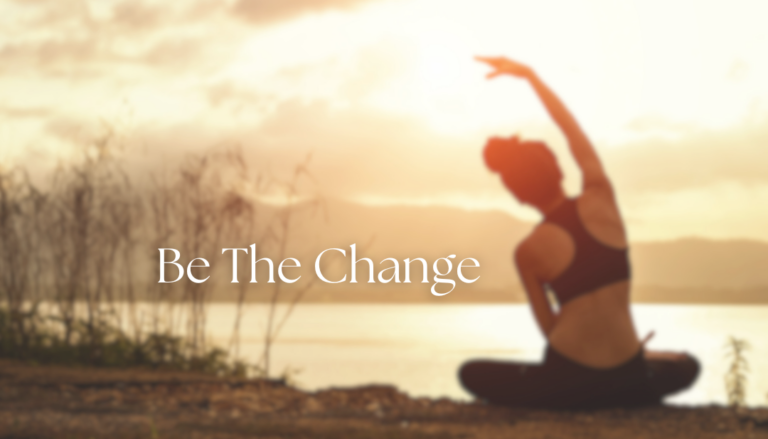
On the hardest day, the day that marked his leaving of this Earth, I forced myself to get up out of bed. I had lost my job weeks earlier, lost my family, and I was on the border of losing any reason for going on. But I am tenacious and I want to heal and live. I deserve happiness, even if I have to give it to myself (which turns out, is the only way you can ever find true happiness. It’s within yourself.). Wanting to heal, I struggled to get my legs to move, but I did, and I walked into a yoga class. I wasn’t looking for transformation. I knew that I was at the end and I didn’t want it to end like this; I was just desperate to hurt a little less.
That day, my instructor noticed before I said anything. She kept her voice calm, her movements simple. When she saw me, I felt like I was pulling my body along, pulling an invisible rope and just trying to get into the room. I knew I looked like a fresh hell had emerged, with swollen, tear-filled eyes. I also knew that at any moment, I could let go of the rope and I would be fine. I was at that point.
She came over, put her hands on my back and took away the cane I was using. At that point in life, it was the only support I had ever known. It was so much more than a physical crutch. Taking me to the back of the room and placing my hands on the barre, she helped me into a supported stretch. She didn’t use flowery words or spiritual maxims. She simply held space. When I twisted and began to go lower, something gave way.
A pop in my back and hip cracked through the tightness like something had broken open. For a moment, I thought my bones had actually snapped. Then the crying began. Not surface-level tears, not the kind you wipe quickly and explain away. These were deep sobs that came from a part of me that had been holding grief like breath, just waiting my entire life for a safe enough place to let go. I didn’t cry like that at his funeral. I didn’t cry like that when I found out he had died. I cried like that because my body had been holding something for thirty years, and finally, it was allowed to be heard. It was the release I needed for my body to heal. The tears washed away some of the pain. I’m not quite there yet, but I am getting stronger every day, my happiness is increasing, and I know that I matter, even if others feel that I don’t.
This is what somatic yoga, or trauma-sensitive yoga, does. It helps you reach that place where healing can start, working directly with the nervous system to create space where the body can complete what trauma interrupted. When stress, abandonment, or trauma arrives and we can’t process it, the energy doesn’t vanish. This energy gets stored over your lifetime within your body. Holding on to the pain that really isn’t ours changes our posture, breath, and how we ultimately see ourselves and engage with the world.
According to the law of conservation, energy cannot be created or destroyed. It changes from one form to another. Much to my surprise, here was science, proven within my body. After that class, something shifted. I still had pain, but it felt lighter. I had not imagined the release. I had not created the grief. I had simply stopped holding it in.
I’ve discovered that if trauma is not released, it becomes part of how we move, or in my case, how we don’t move. It manifests as stiffness, pain, panic, insomnia, digestive issues, chronic illness, emotional dysregulation, and exhaustion that rest cannot fix. The body stops being a home and starts being a container for our traumatic history. That is why releasing trauma and somatic work matters. That is why daily presence in life matters. Because healing does not happen in the mind alone. It never has.
Somatic yoga returns the body to its rightful place in the conversation. It slows down the reflex to override, correct, or perform and looks for attention to where sensation begins. A small shift in the hip, a held breath that finally exhales, a neck that uncoils after years of armor. This is your body crying out and asking to remember what safety feels like. Not imagined safety, but cellular safety where tension no longer has to shape behavior, and stillness no longer signals threat. You know you want to be whole again, and to be able to move without fear of harm. The physical body cries out and only wants to be heard before pain becomes its only language. When presence arrives early enough, the body no longer needs to generate symptoms just to be acknowledged.
Trauma held in tissue does not resolve with time alone. It requires an environment where the nervous system is no longer forced to defend. In that environment, neurochemical cascades begin to shift, fascia begins to release its grip, and the body begins to participate again in life rather than shrink from it. The vagus nerve recalibrates, the diaphragm resumes full excursion, the immune system exits crisis mode. Healing becomes tangible when the body is allowed to complete what memory or trauma once interrupted.
So, how do you heal and become whole again? Many trauma-informed studios offer somatic yoga. Practices can be adapted for any mobility level. If mobility is limited, practices can be adapted from a chair, a bed, or a wall. What matters is not how much you can move, but how willing you are to listen to the story that your body is remembering.
Somatic yoga made space and made way for my breath to return. It helped the body tell the truth that I had always denied and in doing so, it reminded me that healing is not always a thought. Sometimes it’s a stretch or in my case, a collapse like the Tower Card that allows me to rebuild everything.
Do It For You
Choosing a certified somatic or trauma-informed yoga teacher means working with someone who understands what trauma can do to the body and how to support the release of it without causing harm. It’s not about fixing anything. It’s about finally giving your body the time and space it didn’t get when the pain first started.
If in-person classes aren’t available, many online teachers and therapists offer private sessions, live classes, or self-paced courses you can do from home. Most are beginner-friendly, quiet, and supportive. The goal is not performance. The goal is recreating the connection—to yourself, to your body, and to the parts that have been waiting for you to come back.
Whether you’re just beginning or returning to your body after a long time away, these resources exist for one reason: your healing deserves space. It’s past time to put down what was never yours to carry.
Try Before You Buy
You do not need a studio or a polished mat to begin. You just need a body and a little willingness to listen. Many free videos walk you through slow, grounding movements that help release tension. These can be done from your bed, sofa, or floor—no gear, no pressure. Try searching for “gentle somatic yoga” or “somatic movement for trauma.”
What has your body been holding? If something in you cracked open, stretched wide, or finally exhaled after years of keeping still—say so. Let me hear from you in the comments below! Your story belongs in the room too.
Please Note!
I’m not a medical doctor, physical therapist, or licensed mental health professional. This blog is based on personal experience and research. Please consult with your physician or healthcare provider before starting any new movement or healing practice—especially if you have chronic pain, mobility concerns, or trauma history. Your safety matters. So does your healing.