
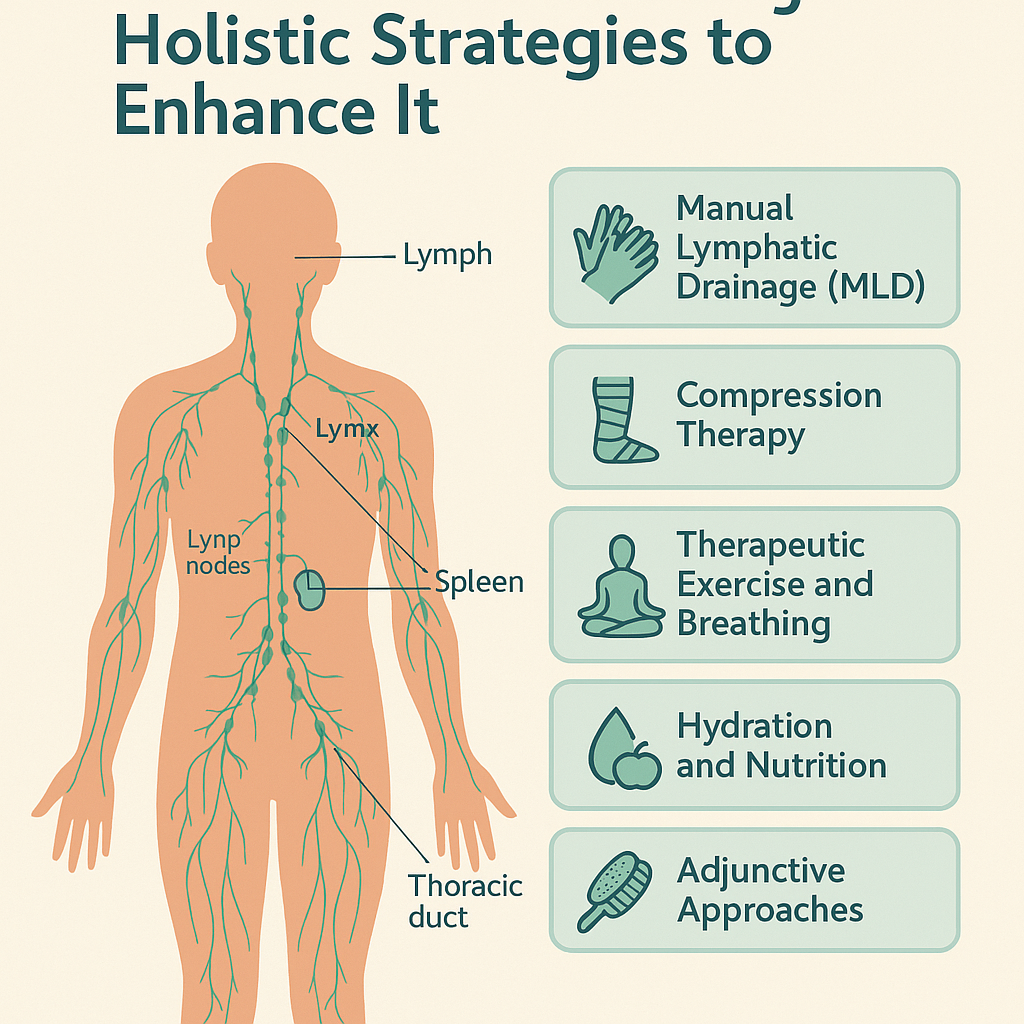
Physiology and Holistic Strategies to Enhance It
Physiology and Holistic Strategies to Enhance It
The lymphatic system is a low-pressure, open circulatory network that performs three vital tasks:
returning interstitial fluid and proteins to the bloodstream,
transporting absorbed dietary lipids, and supporting immune surveillance by carrying antigens and immune cells to lymph nodes (Ozdowski & Gupta, 2023; Welsh & Prentice-Carver, 2023).
Although it parallels the vascular system, the lymphatic system lacks a central pump, making it uniquely sensitive to stagnation and obstruction.
How Lymph Flow Is Generated and Maintained
Lymph formation begins in blind-ended lymphatic capillaries. Overlapping endothelial “button-junctions” allow interstitial fluid to enter whenever outside pressure exceeds the pressure inside the vessel. From there, lymph moves into collecting vessels equipped with one-way valves and smooth muscle layers that rhythmically contract to propel fluid forward (Ozdowski & Gupta, 2023).
These intrinsic vessel contractions are the primary drivers of lymph propulsion, while extrinsic forces—skeletal muscle movement, respiratory pressure changes, and arterial pulsations—add further momentum (Barnhart, 2024; Welsh & Prentice-Carver, 2023).
Ultimately, lymph passes through lymph nodes for immune surveillance, drains into larger trunks and ducts, and empties into the venous circulation at the junction of the subclavian and internal jugular veins (Welsh & Prentice-Carver, 2023). Because there is no heart-like pump, inflammation or obstruction can quickly slow or halt this delicate flow (Ozdowski & Gupta, 2023).
Holistic Protocols to Enhance Lymph Flow
A variety of integrative approaches can help keep lymph moving efficiently. These strategies are gentle yet powerful when applied correctly.
1. Manual Lymphatic Drainage (MLD).
Light, rhythmic strokes and stretches of superficial tissues encourage lymph movement and reduce interstitial pressure. MLD often provides short-term relief, but outcomes improve when it is combined with compression, exercise, and skin care as part of Complete Decongestive Therapy (Vairo et al., 2009).
2. Compression Therapy.
Bandages, garments, or intermittent pneumatic compression devices provide external pressure that assists venous and lymph return. Compression works best when paired with manual techniques (Remien et al., 2024).
3. Therapeutic Exercise and Breathing.
Gentle aerobic activity activates the skeletal-muscle pump, while diaphragmatic breathing enhances intrathoracic pressure changes that “suction” lymph centrally—mechanisms described in standard physiology texts (Welsh & Prentice-Carver, 2023).
4. Hydration and Nutrition.
Adequate hydration reduces interstitial viscosity. Anti-inflammatory nutrition rich in antioxidants and omega-3 fatty acids supports vessel function. Herbal supports such as Galium aparine (cleavers) are sometimes included in clinical herbalism, though evidence remains limited.
5. Adjunctive Approaches.
Dry brushing, contrast hydrotherapy, gentle yoga, or rebounding are frequently used in wellness settings. While evidence varies, these methods can complement primary protocols when practiced with care.
Contraindications, Precautions, and Stress Considerations
Even natural therapies require thoughtful screening. Avoid lymphatic techniques in the presence of:
Acute infection or systemic illness (e.g., cellulitis, sepsis), which may spread pathogens (Remien et al., 2024).
Congestive heart failure, where fluid mobilization can overload cardiac function (Welsh & Prentice-Carver, 2023).
Deep vein thrombosis, due to the risk of clot dislodgement (Remien et al., 2024).
Severe renal/hepatic insufficiency or uncontrolled hypertension, where fluid shifts may worsen disease.
Active malignancy, where MLD is generally considered safe but should only be performed with oncologist guidance (Godette et al., 2006).
Acute fractures, bleeding, or severe local inflammation, until cleared by a healthcare professional.
Practitioners should use minimal pressure, monitor patient tolerance, and progress gradually, particularly in frail or highly stressed individuals. Too much force can collapse the delicate lymphatic vessels (Barnhart, 2024).
Key Takeaway
The lymphatic system safeguards fluid balance and immune transport, but its lack of a central pump makes it vulnerable to stasis. Integrative strategies—manual drainage, compression, therapeutic movement, breathing practices, and supportive self-care—can significantly improve lymph flow when applied carefully. Respecting contraindications ensures these methods remain safe and effective, enhancing tissue health, supporting immunity, and contributing to overall wellness.