
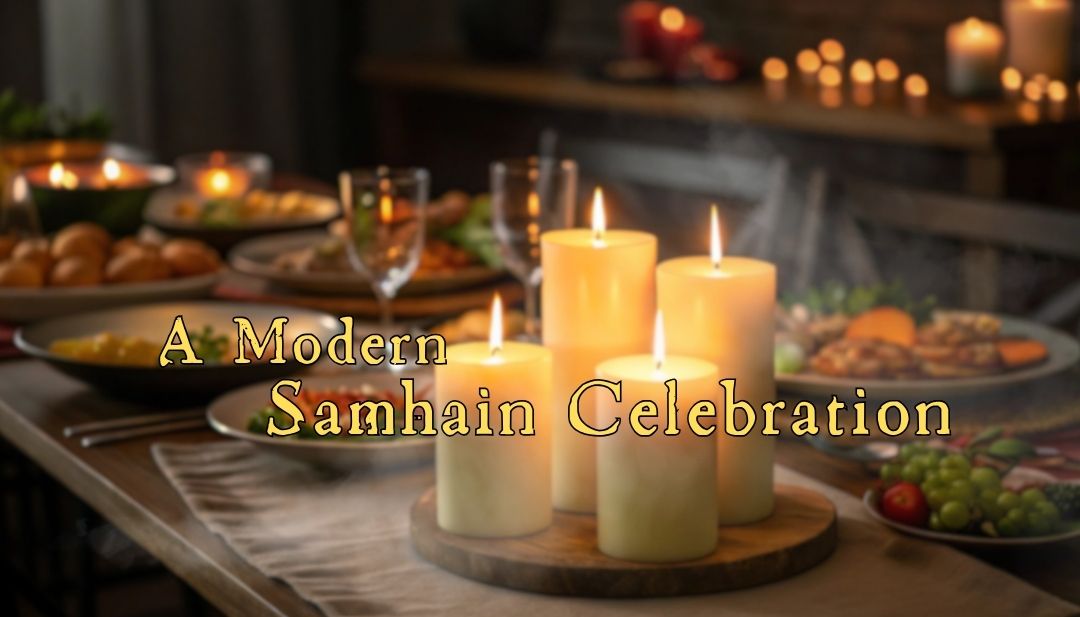
A Modern Samhain Celebration
The light begins to fade from the skies earlier. From the chimneys, Van Gogh swirls are slowly starting to develop in the evening skies. The seasons are shifting and we are returning to the indoors again. Here we are once again at Samhain, the pause between abundance and rest, and a time when the world begins to remember familiar patterns and traditions.
Samhain honors the heart of family continuity. The fields now lie still, but the spirit of the harvest remains in the act of sharing, in the telling of stories, and in the manner in which familiar hands set the table.
When the final harvest was brought in and the fields lay bare beneath the cooling sky, families gathered to share food and remember those who had passed. They instinctively knew that the veil between worlds thinned, allowing their love to reach both ways. Among the oldest of the season’s traditions, the Dumb Supper endures as one of the most intimate, its purpose is to honor the cycle that joins the living to those who came before. Though centuries have passed and distance now separates families across miles and time zones, the impulse to gather has not faded, and technology offers a new table at which they can meet, transforming this ancient meal of remembrance into a digital supper that keeps its meaning alive.
How Memory Took a Seat
The Dumb Supper meaning reaches back centuries. It began as a meal held in silence, usually on the night of Samhain. The word “dumb” referred not to ignorance but to quiet, the belief that silence invited reflection and made space for those who could not be seen. Families would cook a meal from the final harvest, set the table for both the living and the departed, and eat together without speaking. The stillness reminded participants that every life feeds into another, and that gratitude must be expressed through action, not words.
Although the custom began long ago, its purpose in Samhain celebrations has always been the same. The meal offers a moment to acknowledge loss while affirming continuity. A plate is set for each ancestor, often with their favorite food or drink. Remembering the importance of their presence, candles were often set and allowed to burn low. In the past, the living ate slowly, always remembering that silence does not separate the worlds, it joined them.
In modern gatherings that honor the turning of the season, the Dumb Supper rarely holds to its ancient silence, yet its essence remains intact. The meal becomes a conversation between generations, a weaving of memory and presence shaped by shared food and familiar voices. Around the table, stories rise naturally from the rhythm of eating and serving, carrying with them the traces of those who first told them. Each recollection builds upon another until the room feels layered with time, the past living quietly within the present. The old silence has given way to the kind of noise that makes a house feel alive. Voices overlap as plates are passed, and the talk moves easily between the present and the past. Each story told across the table keeps the room anchored, turning an ordinary meal into something that feels both present and lasting.
Bringing It Online
Families are scattered now, living across cities, states, and continents, yet the instinct to share a meal persists. The digital Dumb Supper adapts this tradition for the modern world, turning distance into active participation. The laptop screen now becomes a window into other kitchens, restoring the sense of family that once came from shared harvests and long tables.
Those who plan the supper begin with the menu. Recipes are chosen from memory rather than trend, the kind that carry the scent of childhood kitchens or the sound of a familiar voice giving directions that were never written down. A pot of stew might take shape from a grandparent’s notes, thickened with whatever the season offers. A dessert from long ago returns to the table, not because it is perfect, but because it belongs. Apples, root vegetables, fresh bread, and warm cider remind everyone that the harvest still feeds more than the body.
Each household cooks the same meal in its own kitchen, timing the dishes so that plates are filled at once. Screens glow in corners and on counters, drawing distant rooms together until it feels like one shared space. The tables are dressed with small signs of presence: a glass poured for someone who cannot attend, an extra plate sitting quietly at the edge, a candle lit beside a photograph, until the table turns into a visual cemetery honoring those who no longer walk with us. These gestures, simple and unspoken, give the meal its shape. They make remembrance feel tangible, as if memory itself has pulled up a chair.
The Living Work of Memory
The success of a digital Samhain celebration depends on organization and planning. It is a deliberate act of connection that asks every participant to contribute something personal. Before the evening begins, families decide how they will share the responsibilities. Each role ensures that everyone participates and that no one feels like a spectator.
Three simple roles help the evening unfold naturally:
- The Cook: Prepares a family recipe, explaining its origin and why it was chosen. The Cook keeps the rhythm of the meal, describing scents and textures to make distance fade.
- The Storykeeper: Introduces the memories attached to each dish or person being honored. This person keeps the conversation focused on stories that matter rather than polite small talk.
- The Keeper of the Light (AKA The Tech Guy): Tends the candles or other symbols of remembrance. In the digital version, this role also manages the call, ensuring everyone can see and hear clearly so the experience feels unified.
These roles exist to draw people in rather than keep them in order. Each person contributes something tangible, a story told, a dish prepared, or a small act of care that helps shape the evening much as hands once shaped the harvest. The purpose is to be present, to let the gathering unfold in its own rhythm, and to allow meaning to emerge naturally from the act of sharing.
When Miles Disappear
Even across screens, the sensory details matter. Families can heighten the sense of being together through a few simple choices that appeal to sight, sound, and taste. Before listing the ideas, it helps to remember that the meal should feel like an extension of the season itself, not a holiday production. The final suggestion creates the bridge between memory and practice.
- Use shared textures. Ask each household to use similar table settings–linen napkins, wooden spoons, or plain white plates–to create visual unity.
- Match the light. Keep the lighting low and warm. Candles or lamplight give the screens a natural glow, creating an atmosphere that matches the warmth of traditional Samhain gatherings.
- Sync the sounds. Begin the meal with a shared song or instrumental piece that connects everyone before conversation begins.
Small consistencies link the rooms together until they feel like parts of one house. The intention is not to imitate. It is more important that you try to harmonize the rooms, giving it the sense that all who gather are sitting within the same circle even as miles lie between them.
The Thread That Holds
The Dumb Supper tradition brings the spirit of Samhain celebrations forward without losing its depth. The point of the modern Dumb Supper is not to create nostalgia, but it is about renewal. The Supper offers a moment to gather before the long months of cold set in, giving an opportunity for family and friends to gather, even if they are no longer near. It is a time to cook, to talk, and to remember why people come together in the first place. The meal turns a simple connection into something lasting, proof that even across distance, families still know how to make meaning out of ordinary things.
When people cook together in different kitchens, they reclaim the pattern of older communities that survived through shared labor. When stories are told aloud, they recover the oral traditions that once defined family identity. Even the simple act of lighting a candle for someone who is gone becomes a declaration that connection persists.
Samhain’s strength has always been its balance between gratitude and preparation. The Dumb Supper, whether silent or full of talk, digital or in person, keeps that balance alive. It says that the dead are not forgotten and the living are not alone, strengthening the bond of family and friends. It replaces absence with continuity and turns memory into something that can still be tasted, smelled, and heard.
The Long Work of Connection
Each time the supper is held, it reshapes the idea of family. Distance no longer weakens the bonds that once held people together. The meal becomes an archive of memory, expanding as generations add their own recipes and stories. One year the soup may belong to a grandmother, the next to a child who has learned to cook it. The form evolves, but the table remains the center of the season.
In time, the gathering finds its own rhythm. The first year might feel like an experiment, uncertain and improvised, but soon it settles into something that waits quietly all year to happen again. The talk begins earlier each season, someone asking who will make the soup or whether last year’s dessert should return. Recipes travel through group messages, stories are retold before the table is even set, and the meal starts to feel like a marker in time, proof that the thread still holds.
What stays constant is not the menu or the method but the sense of return. The supper becomes less about honoring the past and more about living inside it, about understanding that memory is not a thing to revisit but a place that keeps expanding. Every person who cooks, speaks, or listens adds to it, and the table grows larger, stretching through kitchens and screens, carrying the same familiar light.
When it ends, no one feels finished. The warmth lingers, the stories continue in messages and calls, and the ordinary world feels steadier somehow. The tradition continues in whatever form people give it. A kitchen filled with voices, a table shared through a screen, a story told for the hundredth time because it still makes everyone laugh. These are the small, ordinary things that keep families connected no matter how far they’ve scattered.
What memories surface when your family gathers? Which dishes never change, and which games or stories still draw everyone back to the table? Those are the beginnings of your own Dumb Supper, alive in the laughter that keeps finding its way home.